How Often Should You Follow an Exercise Routine Each Week?
- Jun 5
- 3 min read

Have you ever wondered whether exercising every day is necessary for better results? Many people begin strong but struggle to maintain consistency because they choose routines that do not fit their goals or lifestyle. The ideal training frequency is not always about doing more it is about finding balance.
Following a well-planned exercise routine can help improve performance, support recovery, and promote long-term fitness progress. Whether the objective is increasing strength, enhancing endurance, improving mobility, or maintaining overall wellness, an effective exercise routine should remain practical, flexible, and easy to sustain over time.
Why Exercise Frequency Matters
Balance Leads to Better Results
Following a consistent exercise routine can help improve physical performance while reducing the risk of burnout.
Benefits of balanced exercise include:
Improved energy levels
Better physical endurance
Increased motivation
Enhanced recovery
More sustainable fitness habits
Training regularly while allowing proper rest often supports long-term success.
Quality Over Quantity
More workouts do not always mean better outcomes. Strategic planning often produces more meaningful progress.
How Many Days Per Week Should You Exercise?
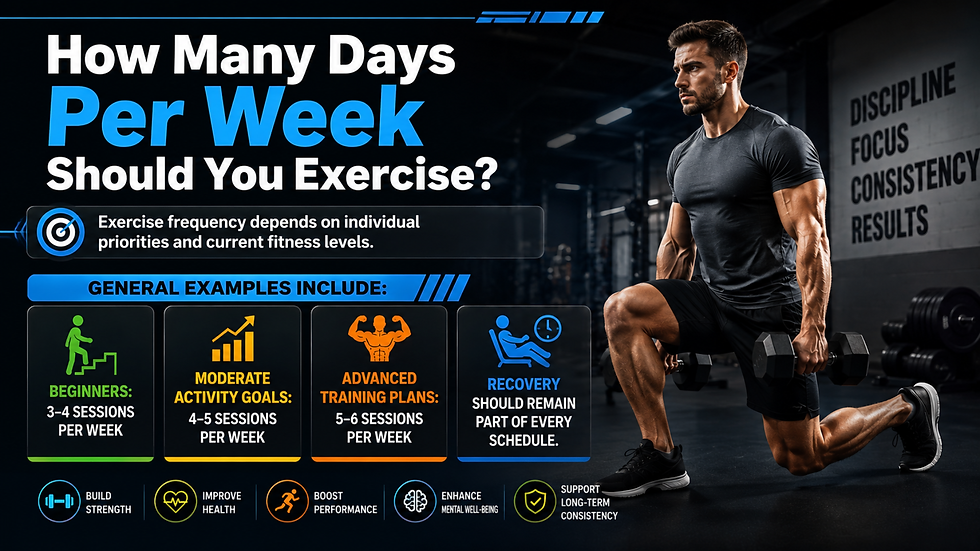
Choose Based on Your Goals
Many individuals struggle to maintain progress because they follow routines that become difficult to sustain over time. Common challenges include skipping recovery, setting unrealistic expectations, following inconsistent schedules, overlooking nutrition, and doing excessive workout volume. Supporting exercise habits with better nutrition awareness tools, such as a Free Calorie Counter, may help individuals stay more consistent and make informed daily choices. In most cases, long-term consistency delivers better results than short periods of intense effort.
Listen to Your Body
Energy levels, soreness, and daily demands should influence workout decisions.
Build a Balanced Weekly Structure
Include Different Types of Movement
An effective weekly plan may combine:
Strength training
Cardiovascular activity
Mobility work
Flexibility sessions
Recovery days
Variety often improves adherence and supports overall development.
Nutrition Supports Performance
Exercise habits become more effective when paired with proper nutrition. Eating a balanced healthy meal can support energy levels, recovery, and overall physical performance.
Avoid Common Exercise Mistakes

Consistency Matters More Than Intensity
Many people stop progressing because they adopt routines that are difficult to maintain.
Avoid:
Training without recovery
Unrealistic expectations
Inconsistent scheduling
Ignoring nutrition
Excessive workout volume
Long-term consistency usually produces stronger results than short bursts of extreme effort.
Adapt Your Routine When Needed
Flexible planning often helps maintain progress during changing schedules.
Recovery Is Part of Progress
Rest Helps You Improve
Recovery allows the body to repair and adapt after physical activity.
Helpful recovery habits include:
Prioritizing sleep
Staying hydrated
Managing stress
Including active recovery
Maintaining balanced nutrition
Rest days support performance rather than slowing progress.
Track Your Progress Effectively
Measure Habits, Not Perfection
Tracking workouts and daily habits can provide useful insights and maintain motivation.
Helpful methods include:
Recording workout sessions
Monitoring consistency
Reviewing progress over time
Adjusting routines as needed
Many individuals also use a Free Calorie Counter to better understand daily nutrition patterns and support broader wellness goals.
To Know More - Calorie Tracker Buddy is LIVE | Your Virtual Health Pet |
Conclusion
Determining how often to follow an exercise routine depends on personal goals, recovery needs, and lifestyle demands. A balanced approach that prioritizes consistency, variety, and recovery often delivers stronger long-term results than excessive training. Building an exercise routine that feels realistic and sustainable can improve adherence and support healthier habits over time.
FAQ
How many days per week should beginners exercise?
Most beginners benefit from three to four sessions per week with adequate recovery.
Is daily exercise necessary?
Not always. Recovery and balance are important for sustainable progress.
Does exercise frequency affect results?
Yes. Consistent and manageable routines often support better long-term outcomes.




Comments